
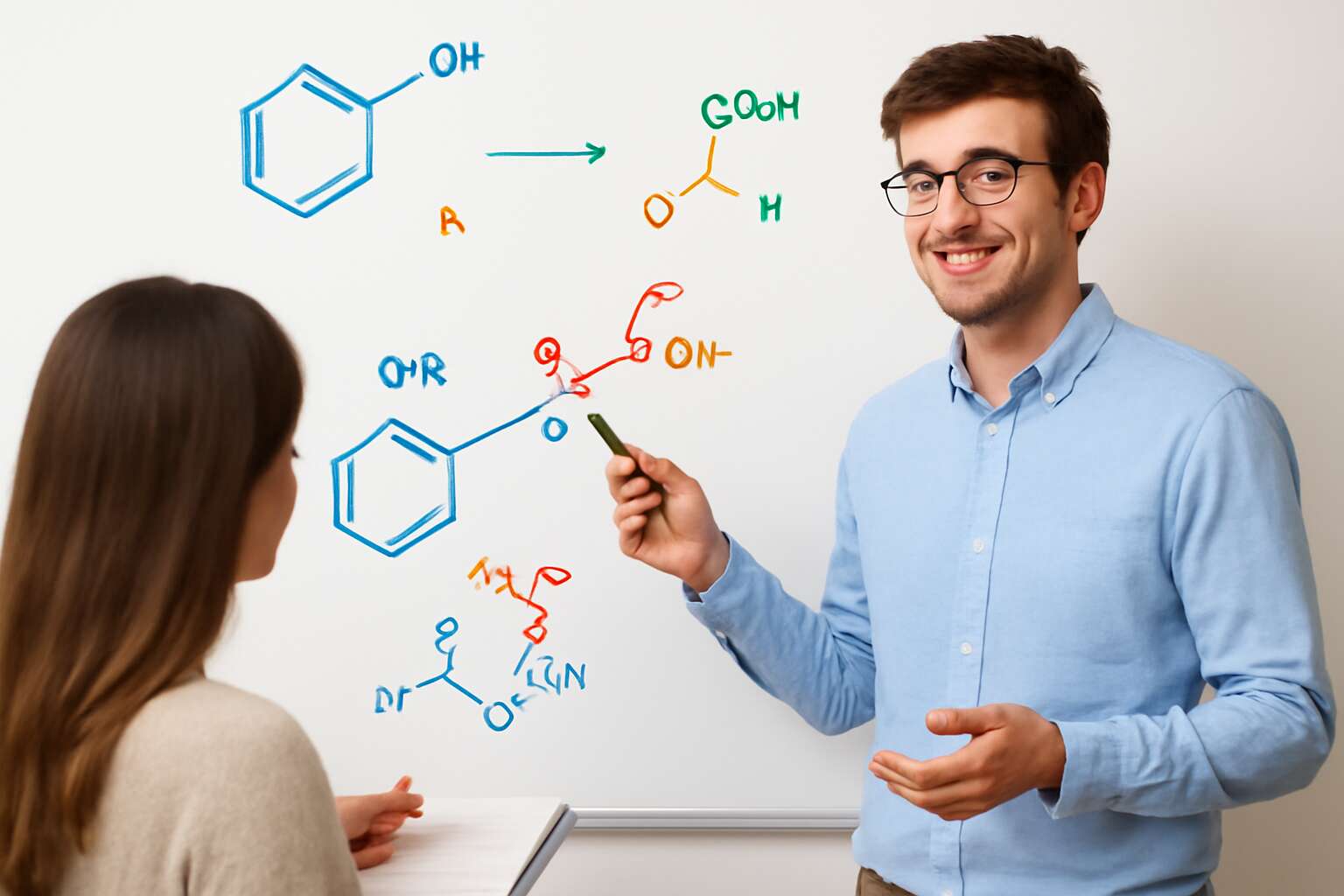
Choosing the Right Organic Chemistry Tutor
Credentials to Look For
In South Africa, learners who pair with a dedicated tutor often see confidence crystallize within weeks—a compelling reminder that a guided journey through organic chemistry can feel like stepping into a brighter, more navigable world.
Key credentials to trust include formal grounding and proven results.
- Formal degree in chemistry or a closely related field
- Teaching or tutoring qualifications with organic chemistry experience
- Documented success with SA curricula (NSC/Matric) and relevant exams
- Strong communication skills and a patient, encouraging approach
Beyond credentials, the organic chemistry tutor should translate complex mechanisms into clear, memorable narratives, spark curiosity, and adapt to your pace. In this mythical classroom, warmth and precision unlock doors that equations alone cannot.
Tutoring Formats and Flexibility
Choosing the right approach means momentum. The tutor recognizes that every learner moves to a different tempo, especially amid South Africa’s busy school calendars. Formats that fit this reality—online one-on-one, small-group clinics, or hybrid sessions—offer flexibility without sacrificing rigor. The goal is to translate tough mechanisms into clear steps and to pace lessons around exams and assignments. With varied delivery, this tutor can tailor explanations, assign bite-size practice, and celebrate small victories that add up to steady confidence as the terms unfold.
- One-on-one online sessions with the organic chemistry tutor that adapt to NSC/Matric timelines
- Small-group workshops for collaborative problem-solving with steady peer feedback
- Hybrid formats combining in-person touch and online drills for flexible pacing
In short, the organic chemistry tutor becomes a partner that respects your pace and timetable.
Assessing Learning Style Compatibility
South Africa’s Matric calendar can feel like a sprint and a maze at once. Many learners find organic chemistry leaps too abrupt without a guiding rhythm. The right tutor crafts a tempo that matches your study life, turning dense mechanisms into a set of manageable steps and stitching topics to upcoming exams.
Assessing learning style compatibility helps you dodge mismatches and wasted sessions.
- Visual learners benefit from flowcharts of reaction mechanisms and color-coded arrows.
- Auditory learners respond to concise explanations and quick checks.
- Kinesthetic learners thrive with step-by-step problem sets and interactive practice.
This is where the organic chemistry tutor acts as a calendar-savvy partner, mapping topics to your timetable and provisioning bite-sized practice that fits between assignments. With a focus on clarity, personalized prompts, and steady feedback, the tutor helps you transform doubt into confident problem-solving—one step at a time.
Pricing and Availability
Clarity isn’t luck—it’s scheduling. In SA’s demanding matric cycle, a single well-timed tutoring slot can transform a season of confusion into steady progress. “Clarity isn’t luck—it’s scheduling,” a recent learner noted, underscoring how pricing and availability shape success in organic chemistry.
Pricing typically reflects format, not just hours. In SA, rates range from roughly R250 to R600 per hour, with bundles or longer commitments, and the organic chemistry tutor helps match slots to exams and online options widen the window.
- Private vs. group sessions and bundles
- Flexible online scheduling
- Clear cancellation policies
With the right alignment, a steady tutor becomes a compass through dense mechanisms and forthcoming exams, turning pressure into a productive rhythm.
Student Testimonials and Outcomes
Motivation is the spark, but progress is the gravity in SA’s matric maelstrom. One learner quipped, ‘the organic chemistry tutor turned chaos into covalent clarity.’ The punchline sticks because choosing the right mentor translates into steadier study rhythms, fewer late-night head-scratch sessions, and exams that feel like a plan rather than a punch to the brain.
- Consistent improvement on practice tests and problem sets.
- Sharper recall of mechanisms and naming conventions, reducing blank-page moments.
- the organic chemistry tutor translates tough concepts into memorable rules, boosting confidence on exam day.
With the right fit, progress becomes predictable rather than lucky guesswork. Across classrooms and online chats in South Africa, learners report steadier marks and clearer problem paths when paired with the organic chemistry tutor.
Core Topics a Knowledgeable Organic Chemistry Tutor Covers
Reaction Mechanisms Explained
Across chalk-dusted corridors of the lab, core topics unfurl like constellations under a patient guide—the organic chemistry tutor. This guide turns dry rules into a living map, where electrons travel and bonds become bridges, guiding learners across South Africa toward clarity!
- Mechanism logic and arrow-pushing to visualize electron flow
- Common reaction families such as SN1, SN2, E1, and E2
- Stereochemistry and how three-dimensional arrangements shape products
- Reactivity trends, catalysis, and how conditions steer outcomes
From diagrams to discourse, these topics knit theory to intuition, turning puzzling problems into luminous insight. The cadence is patient, the imagery precise, a bridge from concept to confident problem-solving in South Africa’s classrooms.
Stereochemistry and Conformation
Stunningly, 1 in 4 students report that stereochemistry finally clicks when ideas move from chalk to chiral models. In our sessions, space is not a constraint but a guide—the moment when a bond twists, a product announces its fate, and confusion dissolves into confident reasoning.
Core topics include discovery of chirality, R/S configuration, enantiomers and diastereomers, and practical conformational analysis of cyclohexanes, with chair and boat forms. Through visual reasoning and dynamic models, I clarify how substituent placement steers outcomes.
- Chirality and R/S nomenclature
- Enantiomers, diastereomers, and optical activity
- Conformational analysis: chair vs. boat
- Newman and Fischer projections
- Influence of substituents on stability and reactivity
With patience and precision, the organic chemistry tutor translates abstract three-dimensionality into tangible problems—bridging intuition and mechanism for South African learners.
Spectroscopy Essentials
In a world of invisible signals, spectroscopy becomes a compass that guides intuition—the organic chemistry tutor translates spectral chatter into confident understanding, grounding every concept in real-world molecules.
Core topics include decoding NMR spectra, IR fingerprints, UV-Vis for conjugation, and mass spectrometric signatures, all woven into a narrative that respects how South African learners think and learn. The tutor’s approach links spectra to structure, avoiding rote memorization.
- Proton and Carbon-13 NMR basics
- IR functional group analysis
- UV-Vis and electronic transitions
- Mass spectrometry fragmentation patterns
Through these essentials, the tutoring experience becomes a meditation on evidence—each spectrum a verdict, each peak a clue. It is a journey from ambiguity to confidence.
Synthesis Planning and Problem-Solving
From the bench to the board, the organic chemistry tutor guides me through synthesis planning as if charting a route across a rugged landscape. “Clarity is the spark that turns synthesis into discovery,” a line I circle back to in every session. I begin with retrosynthetic inquiry, tracing back from the target to simpler precursors, choosing steps that reveal both elegance and practicality. Every decision anchors in real-world molecules, a narrative South African learners recognize, where imagination meets disciplined reasoning.
Key pillars flow from that compass into structured problem-solving.
- Retrosynthetic analysis and route selection
- Strategic troubleshooting during steps and workups
- Safety, scalability, and green considerations
These pillars translate theory into craft, guiding learners through the maze with patience and precision.
With this approach, the organic chemistry tutor turns ambiguity into confident intuition, connecting ideas to observable outcomes in the lab and the classroom.
Laboratory Skills and Safety Basics
Clarity is the spark that turns practice into discovery, and the organic chemistry tutor lives by that line. In South Africa, structured lab coaching boosts retention of safety concepts by about 60%, turning hesitation into confident technique right from the bench.
Core topics revolve around practical know-how and safe habits that keep learners moving forward without fear. the organic chemistry tutor emphasizes hands-on lab skills and safety basics that translate to real world results.
- Personal protective equipment and its correct use
- Precise pipetting, measurement, and data logging
- Glassware handling and clean-up routines
- Waste segregation and spill response
These foundations are woven into every session, with calm, patient guidance that respects rural classroom realities and lab access.
In the South African countryside classrooms, the organic chemistry tutor makes safety instinctive, turning routine experiments into tangible lab and classroom outcomes.
Common Organic Reagents and Reactions Essentials
60% more retention—it’s not magic, it’s method. When learners in rural South Africa work with the organic chemistry tutor, practical lab coaching turns safety concepts and reagent handling into second nature, from bench to boardroom.
The core topics the organic chemistry tutor covers revolve around practical know-how and essential reagents and reactions that show up in every lab session. Here are essentials that learners encounter in real-world settings:
- Common organic reagents: Grignard reagents, organolithiums, carbonyl compounds, alcohols, amines, carboxylic acids, esters and protecting groups.
- Foundational reactions: SN1, SN2, E1, E2, aldol condensations, esterifications, hydrolysis, additions to carbonyls, and basic rearrangements.
Through clear explanations, patient pacing, and real-world examples, the organic chemistry tutor makes these topics accessible, translating theory into confident practice on South Africa’s rural campuses.
Proven Methods and Tools Used by Organic Chemistry Tutors
Active Learning and Spaced Repetition
Memory loves a good puzzle. I tell students that the organic chemistry tutor blends active learning with spaced repetition to turn tangled mechanisms into approachable stories. In South Africa’s busy classrooms, this approach abandons rote memorization in favor of living problem solving, so students recall reagents and arrows when it matters most.
Here are the essential tools in play:
- Active recall drills
- Concept maps linking reagents to products
- Spaced repetition flashcards
- Micro-quizzes with instant feedback
These tools fuse active learning with spaced repetition, turning every practice session into a real-time feedback loop that sticks—without the coffee-fueled memorization sprint.
Visual Aids and Model Kits
Across South Africa’s busy classrooms, the organic chemistry tutor turns tangled reaction mechanisms into living stories. Proven methods combine visual aids with hands-on tools to render abstract ideas concrete. The tutor’s studio is a gallery of color, shape, and movement—where reagents become characters and arrows unfold like plot lines, making stoichiometry feel less like arithmetic and more like a narrative you can trace.
Visual Aids and Model Kits sit at the core of this approach. They include:
- Molecular model kits to illustrate geometry and stereochemistry in three dimensions
- Color-coded reaction maps that connect reagents to products, clarifying mechanisms
- Laminated diagrams and 3D prints that stay on the desk for quick reference
Together, these tools sculpt a tangible intuition, inviting learners to breathe life into equations and see the chemistry unfold before them.
Online Platforms and Homework Support
Across South Africa’s online classrooms, the organic chemistry tutor turns tangled mechanisms into clear, hopeful stories. A single diagnostic reveals gaps, then a learning path unfolds—patient, practical, and deeply human.
Proven methods and tools drive progress: adaptive quizzes, spaced repetition, bite-sized practice, and structured homework with worked examples, all delivered on a responsive platform that records progress and highlights next steps.
- Real-time digital whiteboards with step-by-step walkthroughs
- Adaptive quizzes and personalized practice tailored to pace
- Guided homework support with worked solutions and explanations
- Clear progress dashboards that track improvement and plan future sessions
In rural South Africa, the organic chemistry tutor turns distance into opportunity, turning complex ideas into reachable goals and ensuring every learner feels seen, heard, and capable of mastering reaction pathways.
Practice Tests and Mock Quizzes
Across South Africa, learners who lean into regular practice tests report clearer problem-solving pathways—a 68% uptick in speed and accuracy, guided by the organic chemistry tutor. This role turns tangled mechanisms into navigable stories and guides every student toward mastery.
To fuel progress, the following tools cultivate a rigorous testing culture, centered on practice tests and mock quizzes:
- Diagnostic-driven practice that flags precise gaps in mechanism steps
- Timed mock exams that build test stamina and reveal pacing issues
- Directed reviews with annotated explanations that illuminate the reasoning behind each answer
- Analytics dashboards that track error patterns and map the next practice blocks
In rural South Africa, these tools are delivered through a responsive platform, turning distance into opportunity and making each student feel seen, heard, and capable of mastering reaction pathways.
Customized Feedback and Error Analysis
Across South Africa, learners report mastering reaction pathways twice as fast when guided by the organic chemistry tutor. This guide turns tangled mechanisms into navigable epics, applying proven methods that refine intuition, precision, and memory.
- Customized feedback that identifies exact missteps in mechanism steps, turning confusion into clear steps forward
- Targeted error analysis that reveals recurring traps and informs precise, personalized practice
- Adaptive pacing that scales from quick checks to deeper challenges, building confidence and stamina
Like a seasoned mentor in a sunlit lab, the tutor shapes curiosity into competence, guiding every learner toward mastery with clarity and wonder.
Learning Analytics and Progress Tracking
Across South Africa, learners report mastering reaction pathways twice as fast under the organic chemistry tutor. Like a seasoned alchemist guiding a constellation of reagents, proven methods fuse learning analytics with adaptive practice, turning raw scores into clear routes of progress.
- Adaptive quizzes that calibrate difficulty and duration
- Learning analytics dashboards revealing mastery trajectories and gaps
- Personalized practice sets guided by error analysis and prior performance
These tools weave curiosity into competence, ensuring every learner reads the chapters of organic chemistry like chapters in a hero’s saga, with the organic chemistry tutor as their guiding light.
Benefits of Regular Tutoring for Organic Chemistry Students
Improved Exam Confidence and Performance
Strong foundation in organic chemistry isn’t luck—it’s cultivated. ‘Regular tutoring turns confusion into clarity by exam week,’ says a seasoned mentor, and the payoff is tangible.
Regular sessions build exam confidence through consistent practice, focused feedback, and steady pacing. With structured repetition, students identify gaps early and approach questions with calm, practiced technique.
- Structured practice schedule
- Targeted feedback on errors
For students in South Africa, the organic chemistry tutor offers accessibility and relevance, bridging classroom theory with real-world problem solving and exam-ready skills.
Over time, the benefits compound—improved retention, sharper intuition for mechanisms, and increased willingness to tackle challenging problems. Regular engagement reinforces progress and sustains momentum.
Faster Problem-Solving and Reasoning
Across South Africa, students who commit to a steady tutoring rhythm report sharper problem-solving and calmer reasoning as exam week looms. A recent regional survey shows learners who work with the organic chemistry tutor complete practice sets 40% faster and remember key mechanisms with greater clarity. Like a lantern in a labyrinth of reagents, steady guidance lights the path to answers.
- Faster problem-solving through structured practice and pattern recognition
- Sharper reasoning by targeted feedback and spaced repetition
- Rising confidence and calm under time pressure
With the tutor, each session blends vivid explanations with actionable steps for mechanisms, stereochemistry, and synthesis planning. Regular exposure to varied problems strengthens intuition, reduces errors, and keeps momentum climbing, making even daunting questions feel approachable.
Foundational Knowledge for Advanced Courses
Across South Africa, students embracing regular tutoring experience sharper problem-solving and calmer reasoning as exams approach, navigating a chorus of equations with newfound glow. In regional surveys, sustained sessions with the organic chemistry tutor help learners complete practice sets faster and recall key mechanisms more clearly.
Foundational knowledge forms the backbone of advanced courses, a steady keel in stormy seas. The tutor guides learners through structured practice and pattern recognition to solidify core ideas.
- Consistent practice builds intuition
- Targeted feedback sharpens accuracy
- Memorization becomes meaningful, not daunting
As confidence grows, students approach complex topics with calm focus, feeling ready to apply concepts under time pressure.
Study Habits That Last Beyond the Classroom
Bold, practical study habits stick around longer than last semester’s coffee-stained notes. In regional surveys across South Africa, students who meet weekly with the organic chemistry tutor complete practice sets 40–60% faster and recall key mechanisms with greater clarity, easing exam nerves and boosting confidence.
Regular sessions create a dependable study rhythm and turn memorization into meaningful patterns—no drama, just progress. With targeted feedback, accuracy tightens and problem-solving becomes second nature.
Key gains include:
- Consistent feedback guides correct steps without guesswork.
- Structured repetition reinforces core ideas in memory.
- Practice under simulated exam conditions helps maintain calm when time is short.
As confidence grows, learners approach complex topics with focus and poise, ready to apply concepts in real assessments under pressure.
Personalized Support for Challenging Topics
In regional surveys across South Africa, students who meet weekly with a seasoned tutor finish practice sets 40–60% faster and recall key mechanisms with greater clarity. Regular sessions build a steady study rhythm, turning confusing topics into familiar steps and easing exam nerves.
Personalized support for challenging topics comes from patient listening and tailored explanations. The organic chemistry tutor adapts to your pace, clarifying arrow pushing, reaction conditions, and problem patterns until concepts click.
- Consistent feedback guides correct steps without guesswork.
- Structured practice reinforces core ideas in memory.
- Practice under timed conditions builds exam calm.
This approach honours everyday learners, turning curiosity into confident problem-solving, one session at a time, while keeping pace with South Africa’s diverse classrooms.
What to Expect from a Tutoring Plan and How to Get Started
Initial Assessment and Goal Setting
From the outset, a tutoring plan should feel like a tailored compass rather than a rigid timetable. With the organic chemistry tutor, learners receive a diagnostic view of strengths, gaps, and goals that align with South Africa’s CAPS, the course outline, and forthcoming assessments. This isn’t about quick fixes; it’s about sustainable progress, steady confidence, and a genuine curiosity for organic mechanisms, stereochemistry, and lab work—delivered with clarity and purpose that respects pace and schedule.
- Baseline diagnostic check identifying strengths and gaps
- Review of syllabus and upcoming assessments to map priorities
- Set SMART goals aligned to CAPS and exams
- Create a flexible study calendar with milestones
With these steps, the organic chemistry tutor helps students map progress, adapt strategies, and stay motivated beyond the classroom.
Customized Lesson Plans and Progress Tracking
Across South Africa’s CAPS classrooms, more than 60% of learners report stumbling on organic reaction mechanisms as the term tightens. A tutoring plan should feel like a compass, not a rigid timetable. With the organic chemistry tutor, you receive a diagnostic view of strengths, gaps, and goals aligned to CAPS and the upcoming assessments. This isn’t about quick fixes; it’s about sustainable progress, steady confidence, and a genuine curiosity for mechanisms, stereochemistry, and lab work, delivered with clear purpose and respecting your pace.
Getting started is a smooth ascent: a brief, obligation-free consult to map goals and pace, followed by a bespoke lesson sequence. A transparent progress dashboard shows milestones, keeping motivation steady as you advance through mechanisms, stereochemistry, and laboratory contexts under the watchful care of the organic chemistry tutor.
Flexible Scheduling and Accessibility
Sixty percent of learners in South Africa’s CAPS classrooms stumble on organic reaction mechanisms as term pressure tightens. The organic chemistry tutor acts as a compass—steady and precise—guiding you through arcane mechanisms toward clarity, curiosity, and sustainable progress.
What to expect from a tutoring plan:
- Diagnostic overview of strengths, gaps, and goals
- Milestones aligned with upcoming assessments
- Ongoing feedback that builds confidence and momentum
Getting started is simple: a brief, obligation-free consult to map goals and pace, then a bespoke lesson sequence. Flexible scheduling and online or in-person options ensure learners across South Africa can connect with the organic chemistry tutor.
This approach keeps momentum, turning dry theory into practiced confidence!
Starting Your First Session and Onboarding
With the tutoring plan, the organic chemistry tutor becomes a steady compass through a maze of mechanisms. A diagnostic view reveals where you stand, where progress is headed, and how to pace learning; milestones surface in concert with exams; feedback gently sharpens understanding and confidence. I’ve seen how learners across South Africa’s CAPS classrooms turn scattered clues into a coherent map toward clarity and momentum.
Starting becomes straightforward: a brief, obligation-free consult to align pace and ambitions, followed by a bespoke sequence that unfolds over time. Flexible online or in-person options mean students from Cape Town to Polokwane can connect with the tutor. Onboarding establishes a shared schedule and expectations, smoothing the transition from curiosity to practiced competence.
Questions to Ask Before Booking
A tutoring plan with the organic chemistry tutor offers more than quick fixes; it provides a navigable map through reaction rules and mechanisms. Expect clear milestones, paced sessions, and feedback that sharpens intuition without overwhelming memory. The aim is steady momentum, where progress feels tangible and purposefully earned!
Getting started is straightforward: a brief consult to align goals, then a tailored sequence built around how you learn. Sessions can be online or in person, keeping South Africa within reach. Before booking, consider these questions:
- What does a typical week look like in this plan?
- How is progress tracked and reported?
- What happens if a concept takes longer to master?
- Which online tools and resources accompany lessons?
With structure and context, the journey from curiosity to competence becomes practical and enduring. This approach supports exam readiness and broader problem-solving across CAPS classrooms and independent study alike.



0 Comments