
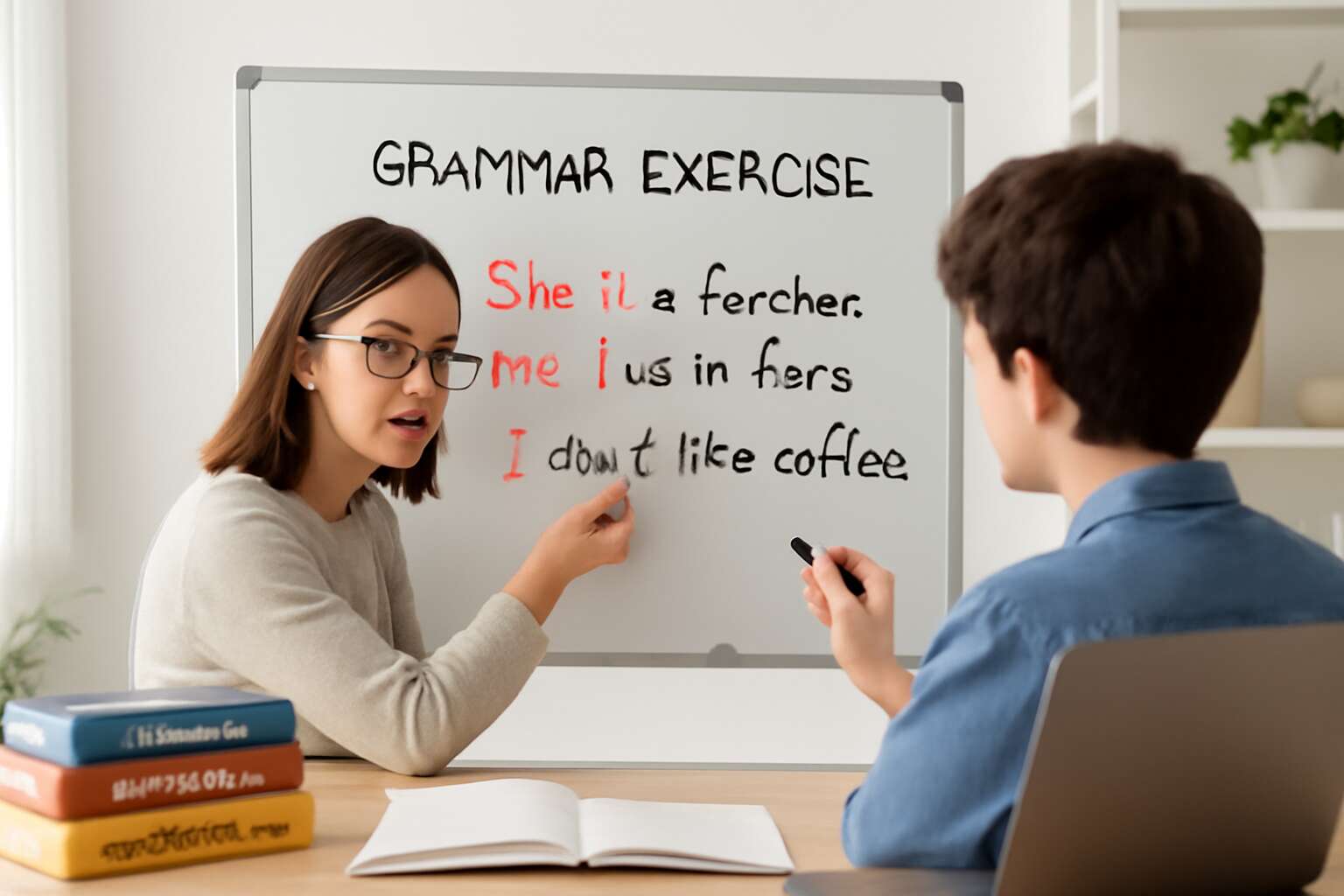
Understanding the Role of a Tutor
Defining a Tutor – What is a tutor and what are their primary responsibilities?
In the bustling world of education, a tutor in a sentence might seem like a simple phrase, but behind those words lies a role more vital than a caffeine boost before exam season. A tutor isn’t just someone who hands out homework and hopes for the best; they are the navigators guiding students through the often treacherous waters of learning. Their primary responsibilities include assessing individual needs, crafting personalized lesson plans, and igniting a spark of curiosity that turns reluctant learners into eager participants.
Essentially, a tutor in a sentence is the unsung hero of academic success—wearing many hats, from motivator to clarifier of complex concepts. In South Africa, where education systems are as diverse as the landscape, the role of a tutor becomes even more crucial. Whether it’s helping a student conquer mathematics or refining language skills, their influence often extends beyond textbooks. For those seeking to understand what a tutor does, think of them as the friendly guide who makes the seemingly impossible, possible—and maybe even a little fun!
Types of Tutors – Various tutoring options including academic, online, and specialized tutors
Understanding the role of a tutor involves appreciating the diverse ways they support learners across South Africa’s vibrant educational landscape. A tutor in a sentence might be simple, but the actual spectrum of tutoring options available is anything but. Whether it’s an academic tutor specializing in mathematics or a language tutor refining conversational skills, each plays a crucial role in enhancing student success.
In today’s digital age, online tutors have gained prominence, offering flexible and accessible learning solutions for students in remote areas. Specialized tutors focus on niche subjects, such as science or arts, tailoring their approach to meet unique learning needs. The variety of tutoring options ensures that every learner can find the right fit, whether they prefer face-to-face sessions or virtual engagement.
For those seeking personalized support, understanding the different types of tutors — from academic to online to specialized — can be transformative. A tutor in a sentence might sound simple, but behind those words lies a world of tailored expertise and dedicated mentorship.
Importance of Tutors in Education – How tutors enhance student learning and confidence
In the grand tapestry of education, tutors are the unsung heroes wielding the magic wand of personalized learning. A tutor in a sentence might be simple—”She is my tutor”—but behind those few words lies a world of tailored guidance and encouragement that can transform a student’s academic journey. In South Africa’s diverse educational landscape, tutors do much more than just teach; they boost confidence, ignite curiosity, and turn confusion into clarity.
Research shows that students who engage with dedicated tutors often outperform their peers—sometimes by a significant margin. This is because tutors serve as both mentors and motivators, creating a supportive environment where learners feel valued and understood. Whether it’s a one-on-one session or an online tutoring platform, the impact remains profound. For example, tutors often:
- Identify and address specific learning gaps
- Encourage critical thinking and problem-solving skills
- Build resilience and self-belief in students
Ultimately, a tutor in a sentence encapsulates more than just a role; it represents a catalyst for academic excellence and personal growth. In South Africa, where education can be as vibrant and varied as its people, tutors are the guiding stars illuminating the path to success for countless learners.
Using ‘tutor’ in a Sentence Correctly
Grammar and Context – How to incorporate ‘tutor’ naturally into different sentence structures
Using ‘tutor’ in a sentence correctly is key to conveying clarity and professionalism. Whether you’re describing a professional or a peer, the word must fit naturally within the context. For example, you might say, “She plans to hire a tutor to improve her mathematics skills,” which clearly highlights the role of the tutor. It’s essential to understand how to incorporate ‘tutor’ in a sentence to avoid ambiguity. When speaking about specific responsibilities, you could say, “The tutor in a sentence, helps students understand complex concepts.” This not only clarifies the role but emphasizes the importance of precise language.
To enhance your writing, consider different sentence structures:
- Simple: “The tutor in a sentence can clarify difficult topics.”
- Complex: “A tutor in a sentence often acts as a guide, making learning more accessible.”
Mastering the use of ‘tutor’ in a sentence ensures your message resonates with clarity, especially in professional or educational discussions. This skill is vital for educators, students, and content creators aiming to communicate effectively about tutoring services or experiences.
Examples of ‘tutor’ in Sentences – Sample sentences demonstrating correct usage
In the vibrant tapestry of education, the role of a tutor extends far beyond mere instruction; it’s about weaving understanding into the fabric of a student’s mind. Incorporating the phrase “tutor in a sentence” seamlessly ensures clarity, especially when discussing the nuances of personalized learning. For example, one might say, “The tutor in a sentence helps to demystify complex subjects,” illustrating how a tutor’s role can be subtly embedded into everyday language.
Understanding how to use “tutor” correctly in a sentence is a subtle art—one that elevates your communication from mundane to masterful. Consider this: “A dedicated tutor in a sentence often exemplifies patience and expertise.” Such usage not only clarifies the role but also highlights the importance of context. Whether you are describing a professional tutor or a peer, the key is natural integration. The difference lies in how fluidly the word fits within your narrative, enriching your message without sounding contrived.
In essence, mastering the use of “tutor in a sentence” enhances your ability to articulate educational concepts with precision and sophistication—an invaluable skill in South Africa’s diverse learning landscape.
Common Mistakes to Avoid – Errors to watch out for when using ‘tutor’ in a sentence
When integrating the term “tutor” into your writing, precision and context are paramount. A common mistake is to assume that simply placing “tutor” into a sentence automatically conveys clarity. Instead, the phrase “tutor in a sentence” should be used thoughtfully to ensure the meaning remains clear and authentic. Overgeneralizing or misplacing the word can lead to confusion, diluting the message you wish to communicate about education or mentorship.
Many writers fall into the trap of awkward phrasing, such as “the tutor in a sentence helps students,” which sounds unnatural or forced. To avoid this, focus on how the word fits naturally within the sentence structure and maintains the overall tone. For example, instead of saying, “A tutor is important,” try, “The role of a tutor in a sentence underscores the importance of personalized guidance.” This subtle shift preserves clarity and enriches your narrative.
Be cautious of using “tutor” in a sentence that lacks proper grammatical agreement or context. For instance, avoid sentences like, “He is tutor,” which is grammatically incomplete. Instead, say, “He is a tutor,” or “The tutor explains concepts clearly.” These small adjustments elevate your writing, ensuring that the phrase “tutor in a sentence” serves its purpose of demonstrating correct usage without ambiguity.
Enriching your language with accurate and natural incorporation of “tutor” helps to avoid common mistakes that undermine credibility. Keep in mind that the art lies in blending the word seamlessly, allowing it to serve as a bridge between ideas rather than a stumbling block—especially when discussing the vital role of tutors in South Africa’s diverse educational environment.
SEO Strategies for ‘tutor in a sentence’
Keyword Optimization – Integrating ‘tutor in a sentence’ seamlessly into content
Effective SEO for the keyword ‘tutor in a sentence’ hinges on seamless integration within your content. When optimizing for this phrase, it’s essential to embed it naturally, avoiding awkward placements that could compromise readability. For example, incorporating the phrase into diverse sentence structures—such as questions, statements, or examples—helps signal relevance to search engines.
A strategic approach involves highlighting how the phrase can be used in educational contexts, like: “A tutor in a sentence can clarify complex concepts quickly.” This not only demonstrates usage but also enhances keyword presence. Remember, variations matter; using synonyms or related phrases maintains reader engagement while boosting SEO.
To maximize impact, focus on contextually relevant content where the phrase appears organically. This ensures it resonates with both search algorithms and human readers, making your website more discoverable for those seeking explanations about ‘tutor in a sentence’ and related topics.
Related Keywords and Phrases – Using synonyms and related terms to boost SEO
In the labyrinth of educational language, the phrase “tutor in a sentence” acts as a subtle yet powerful beacon—guiding learners and educators alike through the nuanced landscape of pedagogical expression. Incorporating this phrase naturally into content requires an artful balance; it should feel organic, not forced, allowing search engines to recognize its relevance without compromising readability. For instance, one might say, “A tutor in a sentence can illuminate the path to mastering complex subjects,” seamlessly blending the keyword while illustrating its practical application.
Enhancing SEO for related keywords involves leveraging synonyms and contextually linked terms such as “educator in a sentence” or “mentorship in a sentence.” These variations serve to diversify the content, enriching the reader’s experience and signaling to search algorithms that the content is comprehensive. When crafting your content, consider embedding these related phrases within relevant educational narratives, which not only boosts visibility but also deepens engagement. After all, natural integration—rather than keyword stuffing—is key to making your website a trusted resource for those seeking clarity on how to use “tutor” in a sentence effectively.
Creating Informative Content – Providing valuable information to improve search engine ranking
In the realm of digital education, crafting content that resonates with both search engines and eager learners is akin to weaving a tapestry of knowledge and clarity. When aiming to optimize for the phrase “tutor in a sentence,” it’s essential to create informative, engaging material that seamlessly integrates this keyword. Search engines favor natural language, so embedding “tutor in a sentence” within contextual narratives enhances visibility without sacrificing readability.
To elevate your SEO strategy, consider illustrating how the phrase functions within different educational scenarios. For example, you might craft sentences like, “A good tutor in a sentence can inspire confidence in students,” which exemplifies practical usage. Incorporating related terms such as “educator in a sentence” or “mentorship in a sentence” diversifies your content and signals depth to search algorithms.
Remember, creating valuable content that addresses the curiosity of learners and educators alike—especially those seeking to understand how to use “tutor” in a sentence—can significantly boost your site’s authority. Strive for natural integration, blending the keywords into educational stories or explanations, rather than forcing them unnaturally. This approach ensures your content remains compelling, authoritative, and optimized for SEO success.
Applications and Benefits of Using ‘tutor in a Sentence’
Educational Content Creation – How educators can use ‘tutor in a sentence’ for teaching purposes
Harnessing the power of the phrase “tutor in a sentence” can significantly elevate educational content, transforming mundane explanations into engaging learning moments. Educators can craft tailored examples that illustrate the nuanced roles of tutors, making abstract concepts tangible for students. For instance, embedding “tutor in a sentence” within lesson plans encourages learners to see the word’s practical application, reinforcing comprehension and retention. This method not only clarifies vocabulary but also deepens understanding of contextual usage.
Furthermore, integrating “tutor in a sentence” into instructional strategies allows for dynamic language practice. Teachers might present diverse sentence structures, prompting students to create their own examples. This active engagement promotes critical thinking and linguistic agility. To maximize SEO, educators should naturally incorporate the phrase into lesson materials, ensuring that content remains organic and accessible. By doing so, they can boost search engine visibility while enriching the learning experience—turning simple phrases into powerful educational tools.
Learning Tools and Resources – Using example sentences for ESL learners and language practice
In the vibrant tapestry of language learning, the phrase “tutor in a sentence” emerges as a beacon of clarity, guiding learners through the labyrinth of vocabulary and grammar. When students encounter this phrase, they unlock a treasure trove of contextual understanding, transforming abstract notions into tangible knowledge. Using “tutor in a sentence” as a learning tool allows ESL learners in South Africa to grasp the nuanced roles of tutors, enriching their linguistic repertoire.
By exploring diverse examples of “tutor in a sentence,” students develop confidence in applying words correctly across different situations. For instance, they might see: “The dedicated tutor in a sentence helped her understand complex algebraic concepts.” Such examples foster an immersive environment where language becomes alive and meaningful.
Incorporating “tutor in a sentence” into educational resources creates an engaging platform for language practice. Teachers can craft exercises that challenge students to produce their own sentences, promoting critical thinking and linguistic agility. This method enhances retention and deepens appreciation for the power of words—making “tutor in a sentence” not just a phrase, but a gateway to mastery.
Enhancing Writing Skills – Helping students improve their sentence construction with ‘tutor’ usage
In the vibrant landscape of South African education, mastering the art of constructing clear and effective sentences is essential. When students learn to incorporate the word “tutor” within a sentence, they not only improve their grammar but also deepen their understanding of the tutor’s vital role in learning. Using “tutor in a sentence” as a learning resource transforms abstract concepts into tangible skills, making language practice both engaging and meaningful.
Enhancing writing skills through the careful integration of “tutor” helps students articulate ideas more confidently. For example, they might craft sentences like, “The tutor in a sentence guided her through complex science concepts,” which exemplifies how tutors support learners. Such exercises foster critical thinking, allowing students to explore various contexts where tutors contribute to success.
Incorporating “tutor in a sentence” into classroom activities or online modules can significantly boost language proficiency. It encourages learners to experiment with different sentence structures and vocabulary, ultimately improving their ability to communicate clearly and effectively. This method not only sharpens writing skills but also cultivates an appreciation for the nuanced role of tutors in shaping academic achievement.


0 Comments